
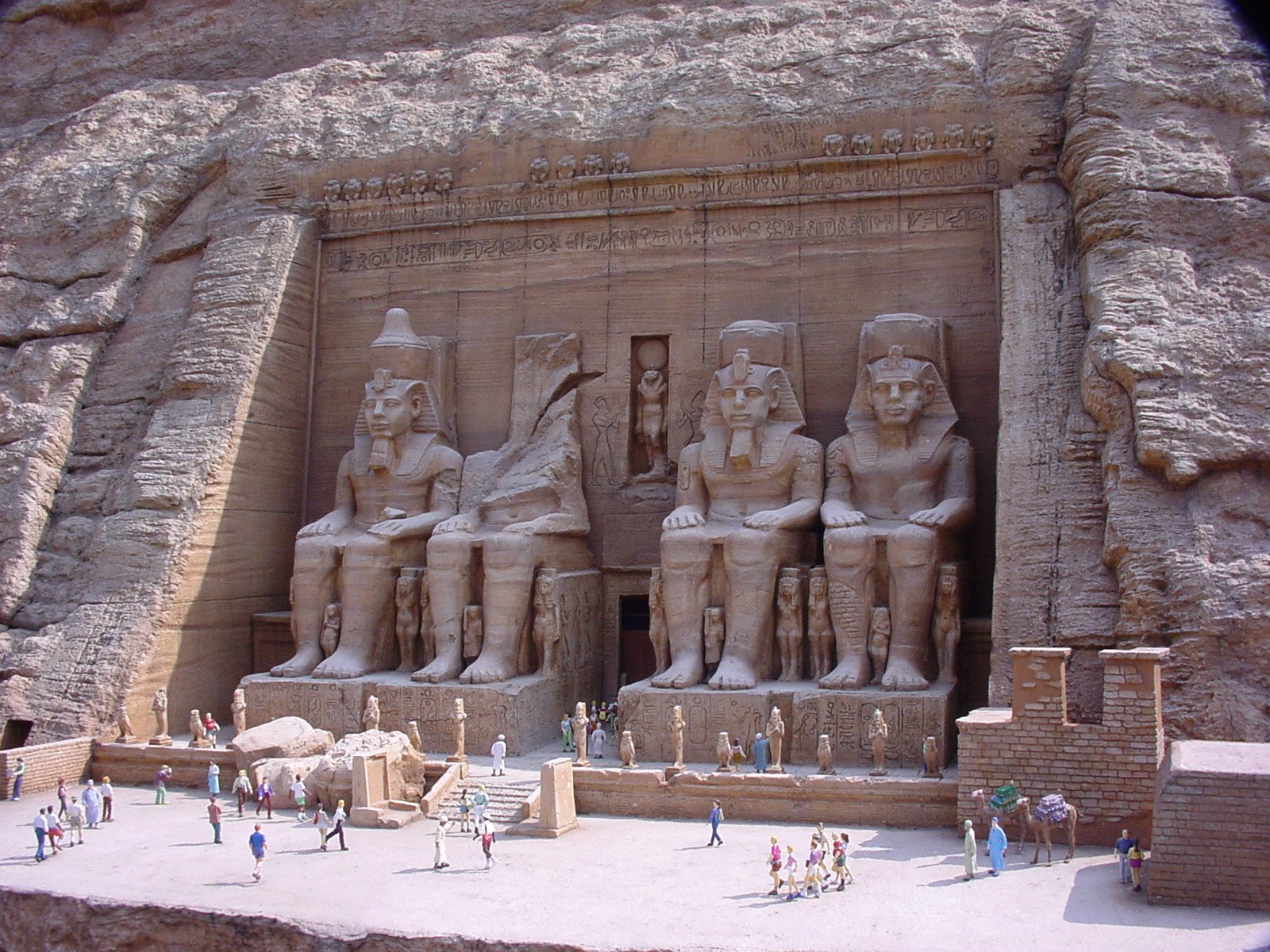
The Temple of Abu Simbel is one of the most iconic and impressive monuments in Egypt, located near the southern border with Sudan. Here are some key details about the Temple of Abu Simbel:
-
Construction: The Temple of Abu Simbel was built during the reign of Pharaoh Ramesses II in the 13th century BCE, specifically between 1264 and 1244 BCE. It was constructed to commemorate Ramesses II's victory at the Battle of Kadesh and to honor the gods Amun, Ra-Horakhty, and Ptah.
-
Location: The temple complex is situated on the western bank of Lake Nasser in southern Egypt, near the present-day town of Abu Simbel. It was originally located further downstream on the banks of the Nile River but was relocated in the 1960s to avoid submersion by the rising waters following the construction of the Aswan High Dam.
-
Architecture: The Temple of Abu Simbel consists of two main rock-cut temples: the Great Temple of Ramesses II and the smaller Temple of Hathor, dedicated to the goddess Hathor and Ramesses II's chief consort, Queen Nefertari. The most striking feature of the complex is the four colossal statues of Ramesses II seated at the entrance of the Great Temple, each reaching approximately 20 meters in height.
-
Sun Festival: Twice a year, on February 22nd and October 22nd, the sun illuminates the inner sanctum of the temple, casting light on the statues of the gods seated inside, while the statue of Ptah, the god of darkness, remains in shadow. This phenomenon was deliberately engineered by the ancient Egyptians to coincide with the anniversaries of Ramesses II's coronation and his birthday.
-
Relocation: In one of the most ambitious archaeological endeavors of the 20th century, the entire temple complex was dismantled and relocated to higher ground between 1964 and 1968 to save it from being submerged by the waters of Lake Nasser. The meticulous relocation process involved cutting the temple into large blocks and reassembling it on an artificial hill, ensuring its preservation for future generations.
-
Tourism: The Temple of Abu Simbel is a UNESCO World Heritage Site and a major tourist attraction in Egypt, drawing visitors from around the world to marvel at its grandeur and historical significance. It stands as a testament to the engineering prowess and artistic achievements of ancient Egyptian civilization.
The Temple of Abu Simbel remains one of the most enduring symbols of ancient Egypt's grandeur and continues to captivate and inspire awe in all who visit it.