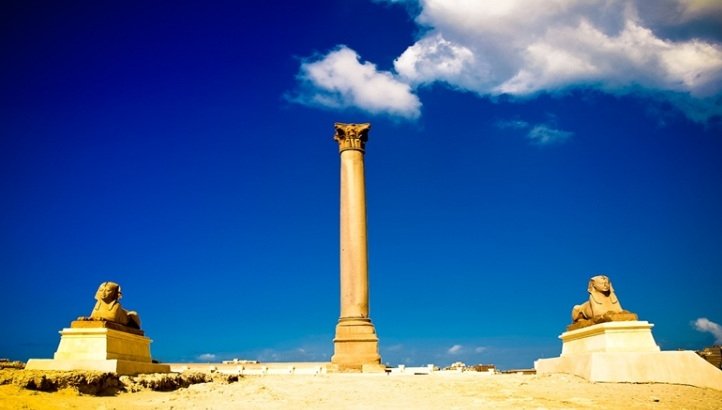
Pompey's Pillar is an ancient Roman column located in Alexandria, Egypt. Despite its name, the pillar has no direct connection to the Roman general Pompey, but rather commemorates the victory of the Roman Emperor Diocletian over an Alexandrian revolt in 297 CE.
Here are some key points about Pompey's Pillar:
-
Construction: Pompey's Pillar is a monolithic column carved from a single piece of red granite, standing at a height of approximately 26.85 meters (88 feet) including its base and capital. It is one of the largest monolithic columns in the world and is estimated to weigh over 285 tons.
-
Purpose: The pillar was likely erected as a monument to celebrate the Roman Emperor Diocletian's suppression of the rebellion in Alexandria. It served as a symbol of Roman power and authority in Egypt during the late Roman period.
-
Location: Pompey's Pillar is situated in the ancient Serapeum complex in Alexandria, near the ruins of the ancient Temple of Serapis. The site was once a prominent center of worship dedicated to the god Serapis, a syncretic deity combining aspects of Greek and Egyptian religious traditions.
-
Design: The pillar is of the Corinthian architectural order, featuring a fluted shaft topped by an ornate capital adorned with acanthus leaves. The column is crowned with a small pedestal, which once likely supported a statue or monument, although no such structure remains today.
-
History: Despite being named after Pompey, the pillar predates him by several centuries. Its construction is attributed to the Roman Emperor Diocletian, who reigned from 284 to 305 CE. The pillar was part of a larger architectural complex that included temples, statues, and other structures dedicated to Serapis and the imperial cult.
-
Tourism: Pompey's Pillar is a popular tourist attraction in Alexandria, drawing visitors from around the world to marvel at its impressive size and historical significance. The site offers panoramic views of the city and the surrounding landscape, making it a favored spot for photography and sightseeing.
Overall, Pompey's Pillar stands as a testament to Alexandria's rich history as a crossroads of ancient civilizations and as a reminder of the enduring legacy of Roman rule in Egypt.