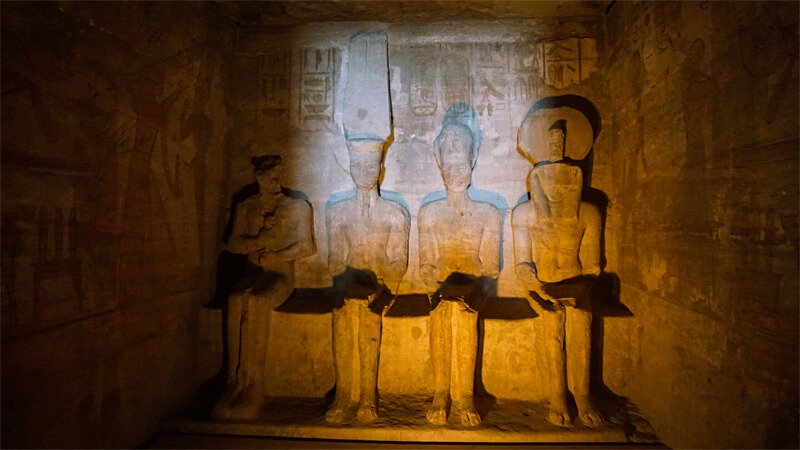
The Abu Simbel Sun Festival is a biannual event celebrated at the temples of Abu Simbel in Egypt, which are dedicated to the pharaoh Ramesses II and his queen, Nefertari. Here are some key points about the Abu Simbel Sun Festival:
-
Location: The Abu Simbel temples are located near the village of Abu Simbel in southern Egypt, on the western bank of Lake Nasser, near the border with Sudan. The temples were originally carved into the rock cliffs during the reign of Ramesses II in the 13th century BCE.
-
Date: The Abu Simbel Sun Festival occurs twice a year, on February 22nd and October 22nd, coinciding with the anniversary of the pharaoh's ascension to the throne and his birthday, respectively. These dates are believed to have been strategically chosen to align with the solar phenomenon that occurs during the festival.
-
Solar Alignment: The highlight of the Abu Simbel Sun Festival is the phenomenon known as the "Solar Alignment," which occurs when the sun's rays penetrate the temple's inner sanctuary and illuminate the statues of the gods seated inside. Specifically, on the mornings of February 22nd and October 22nd, the sunlight enters the temple and illuminates the statues of Ramesses II, the sun god Ra-Horakhty, and the god Amun-Re, while leaving the statue of Ptah, the god of darkness, in shadow.
-
Significance: The Solar Alignment at Abu Simbel is believed to have been intentionally designed by ancient Egyptian architects to commemorate and reinforce the pharaoh's divine and solar attributes. The alignment of the sun with the statues of the gods was seen as a manifestation of the pharaoh's divine connection and the renewal of cosmic order.
-
Celebrations: The Abu Simbel Sun Festival attracts visitors from around the world who come to witness the Solar Alignment and participate in the celebrations. The festival typically includes musical performances, traditional dances, and reenactments of ancient Egyptian rituals, as well as opportunities for visitors to explore the temples and learn about their history and significance.
-
Tourism Impact: The Abu Simbel Sun Festival is a significant tourism event for Egypt, drawing large crowds of tourists and generating revenue for the local economy. The festival provides an opportunity for visitors to experience ancient Egyptian culture and history firsthand and to marvel at the architectural and engineering achievements of the temples of Abu Simbel.
Overall, the Abu Simbel Sun Festival is a unique and awe-inspiring event that celebrates the ancient Egyptian heritage and the enduring legacy of Ramesses II and his magnificent temples